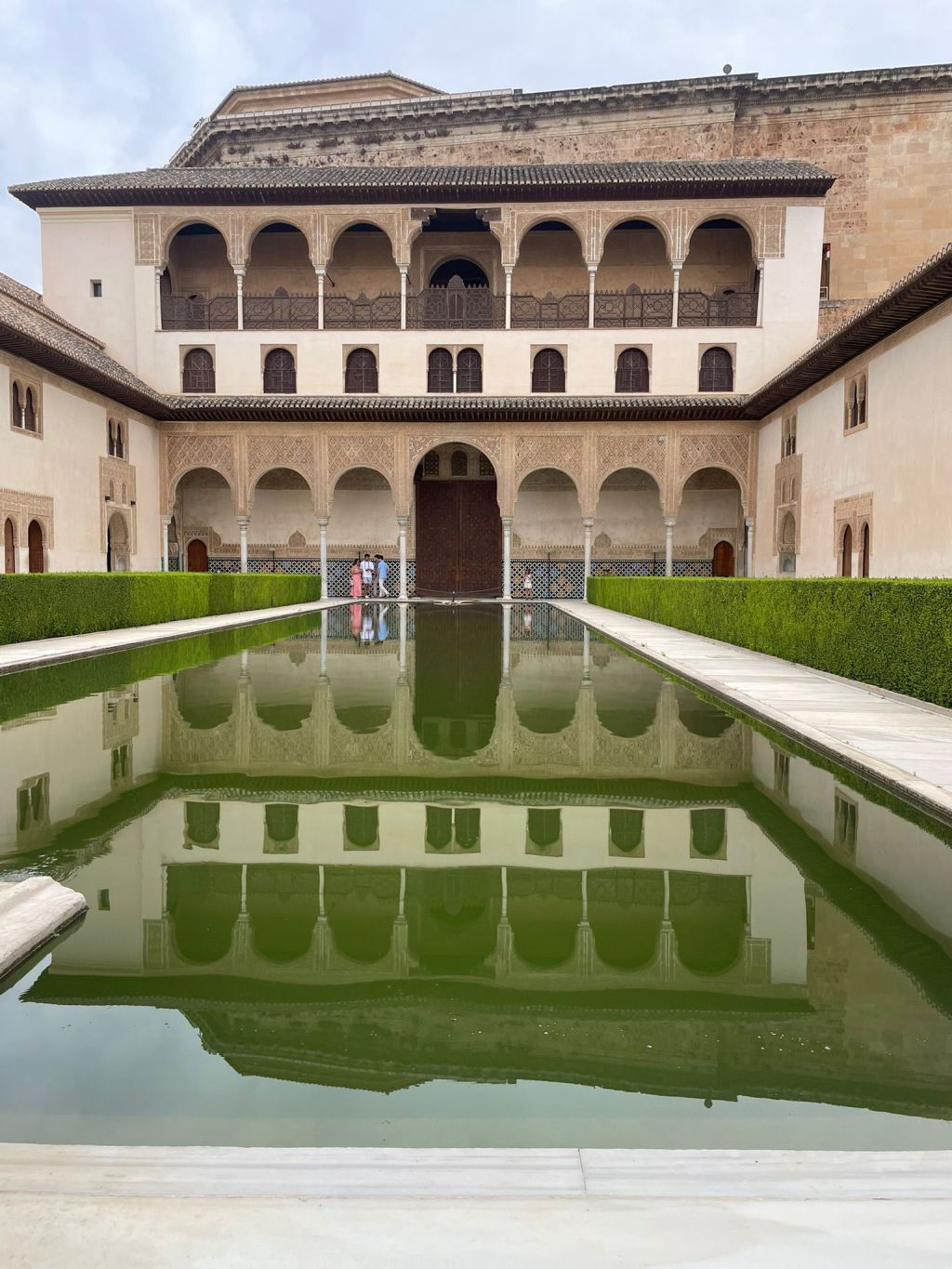
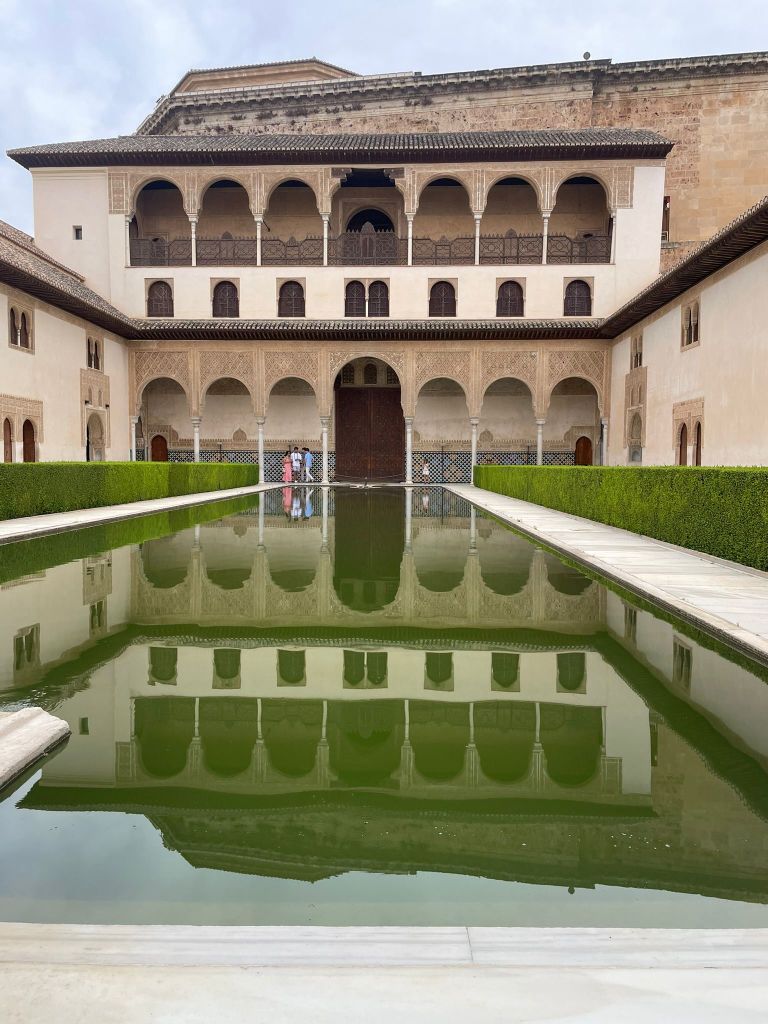
I expected the Alhambra to be beautiful. I did not expect it to feel so exquisitely serene.
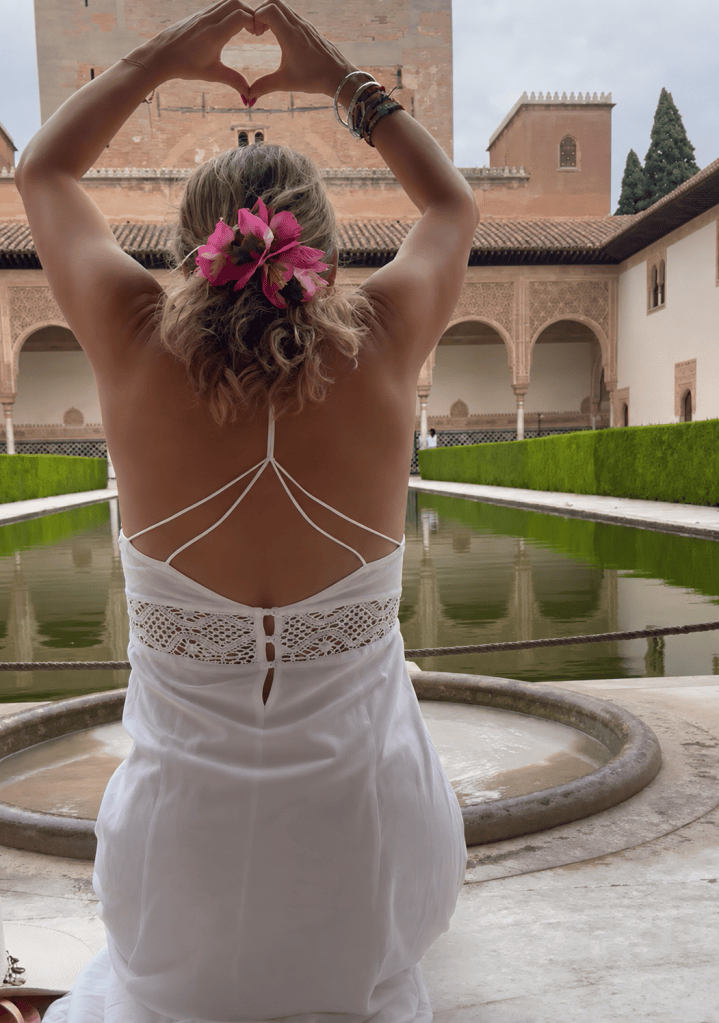
It was the water I noticed most. Not simply contained in fountains or placed decoratively in gardens, but flowing through the palace itself. Moving quietly along narrow channels, gathering in still pools, reflecting the arches and carrying its gentle music from one space to another. Its movement amplified by the fountains and the waterfalls beautifully decorating the space. The water breathed life into the building.
Water softened the stone, cooled the heat and brought movement to rooms created centuries ago. At times it was barely more than a whisper, but I found myself following it, listening for it and allowing it to lead me through the palace. There was something deeply spiritual about its presence.
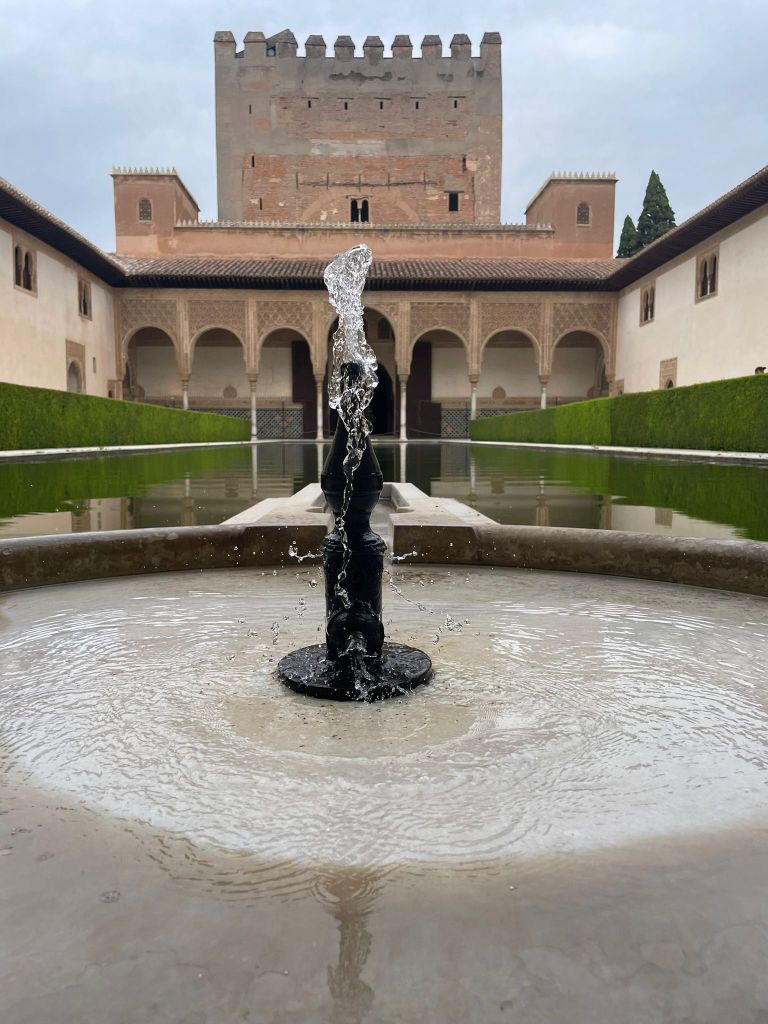
And yet, I also felt a contradiction. The Alhambra was created, at least in part, to be seen. To impress. To communicate wealth, sophistication, authority and power. The Alhambra we recognise today began to take shape in 1238, when Muhammad I, known as Al Ahmar and founder of the Nasrid dynasty, established his court on Granada’s Sabika hill. It became far more than a palace. It was a fortified royal city, containing the residences of the sultans, the court, senior officials, servants and elite soldiers.
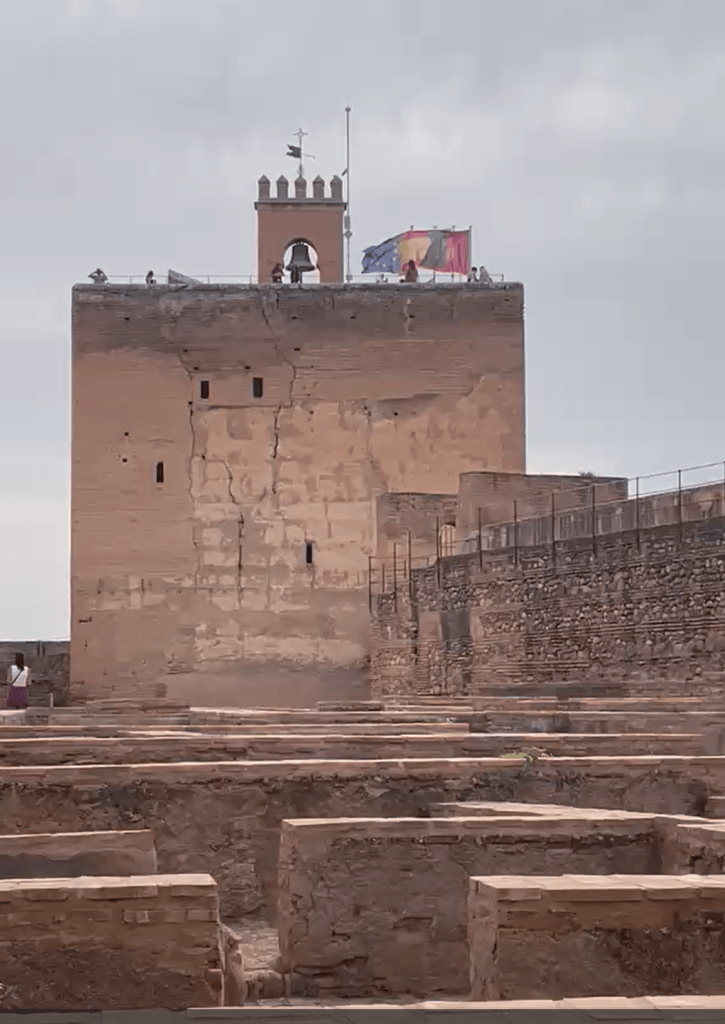
Its oldest surviving section is the Alcazaba, the fortress at its western end. Strong, austere and defensive, it stands in contrast to the exquisite delicacy of the palaces that followed. The Alhambra reached the height of its splendour during the fourteenth century, particularly under the sultans Yusuf I and Muhammad V. From its elevated position, the complex looks out across Granada, the Albaicín and the surrounding landscape. It is impossible not to feel its command of the city below.
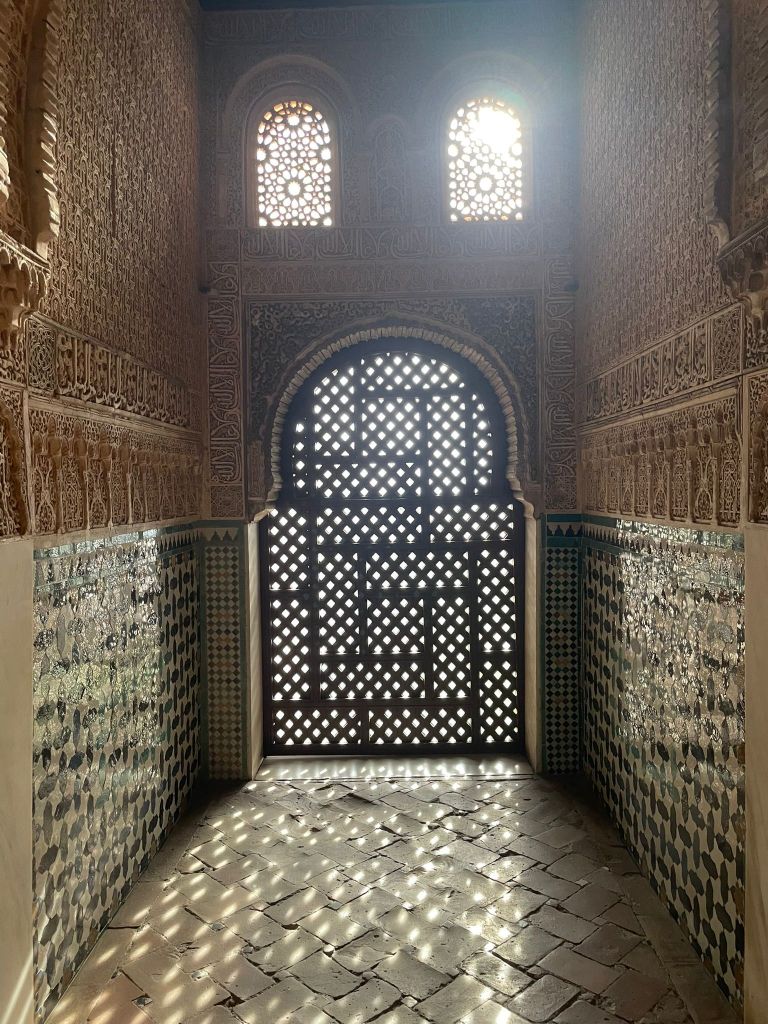
Everything about it speaks of human ambition. And yet, everything I felt there spoke of something gentler. I had only recently come down from the Sierra Nevada, and I was still carrying the energy of the mountain within me. The silence. The exposure. The sense of being stripped back to something simpler and more instinctive.
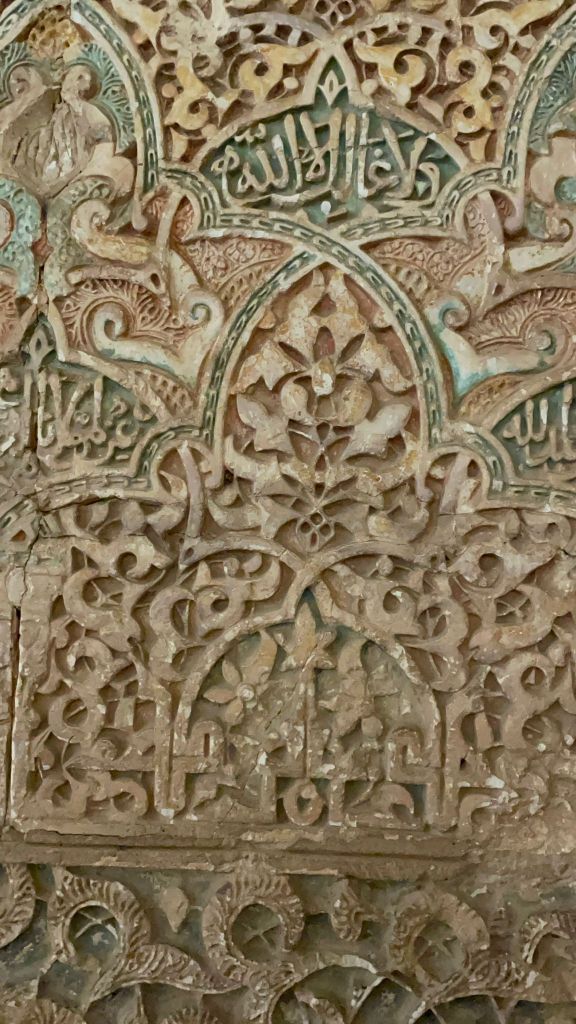
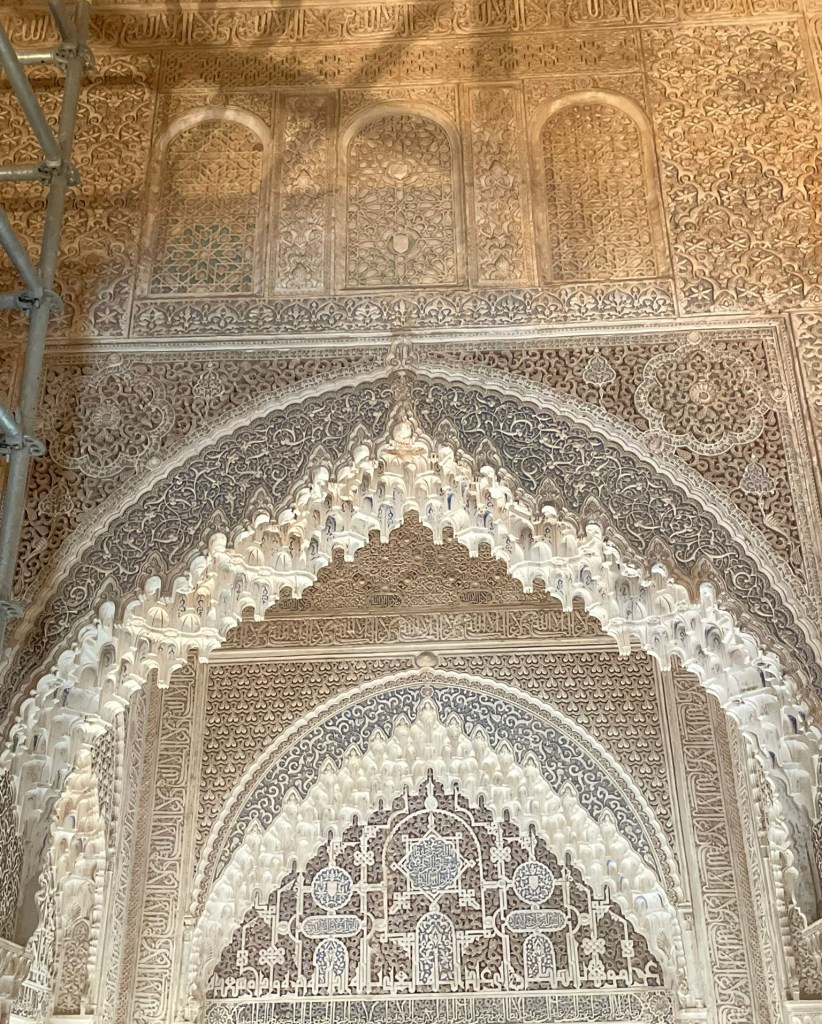
At the Alhambra, I found that same energy expressed in an entirely different language. The power of the mountain had become delicacy. It was there in the fine, almost lace-like plasterwork, in the repeated geometry, the flowing Arabic calligraphy and the intricate patterns of leaves, flowers and stars. Materials that sound ordinary, plaster, wood and ceramic, were transformed into something almost weightless.
UNESCO describes the inscriptions as creating a form of “talking architecture”, because the walls carry religious, political and poetic messages. One phrase appears repeatedly throughout the Nasrid decoration: “There is no victor but Allah.” It changes the meaning of the magnificence.
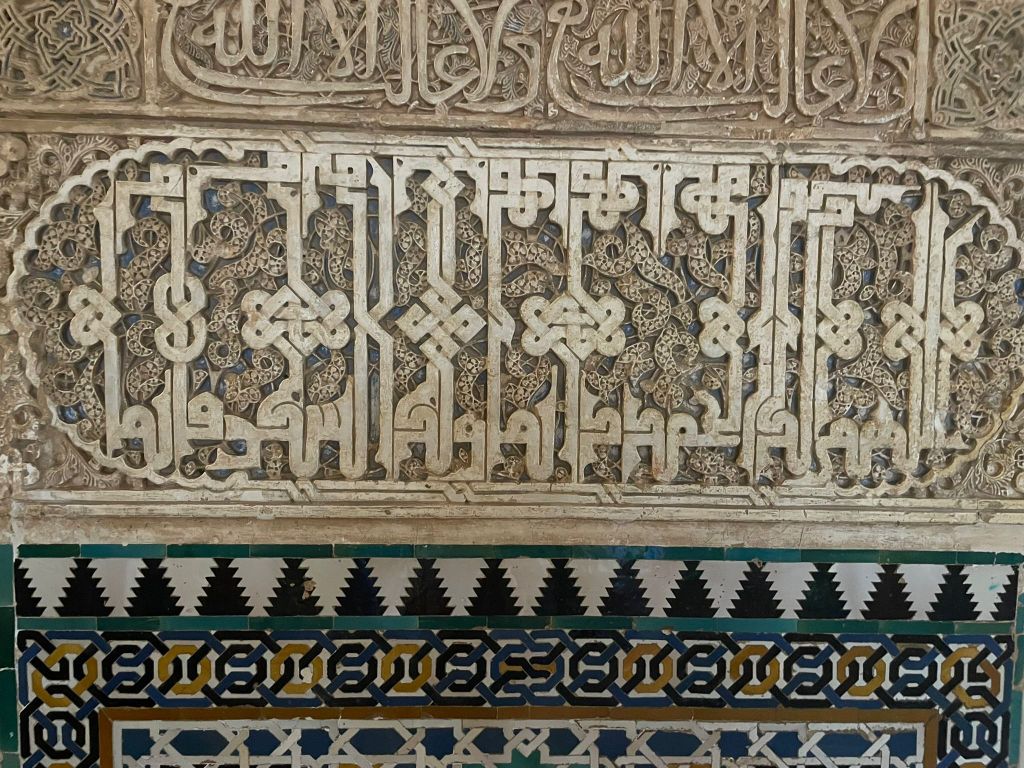
Here was a royal dynasty constructing an extraordinary expression of its own power, while covering its walls with a reminder that ultimate power did not belong to any ruler. Perhaps the spirituality and the showmanship were not entirely in conflict. Perhaps they were part of the same conversation. Human beings could create beauty, demonstrate knowledge and build something intended to outlive them, but the architecture still pointed beyond its creators. Even the water held this tension.
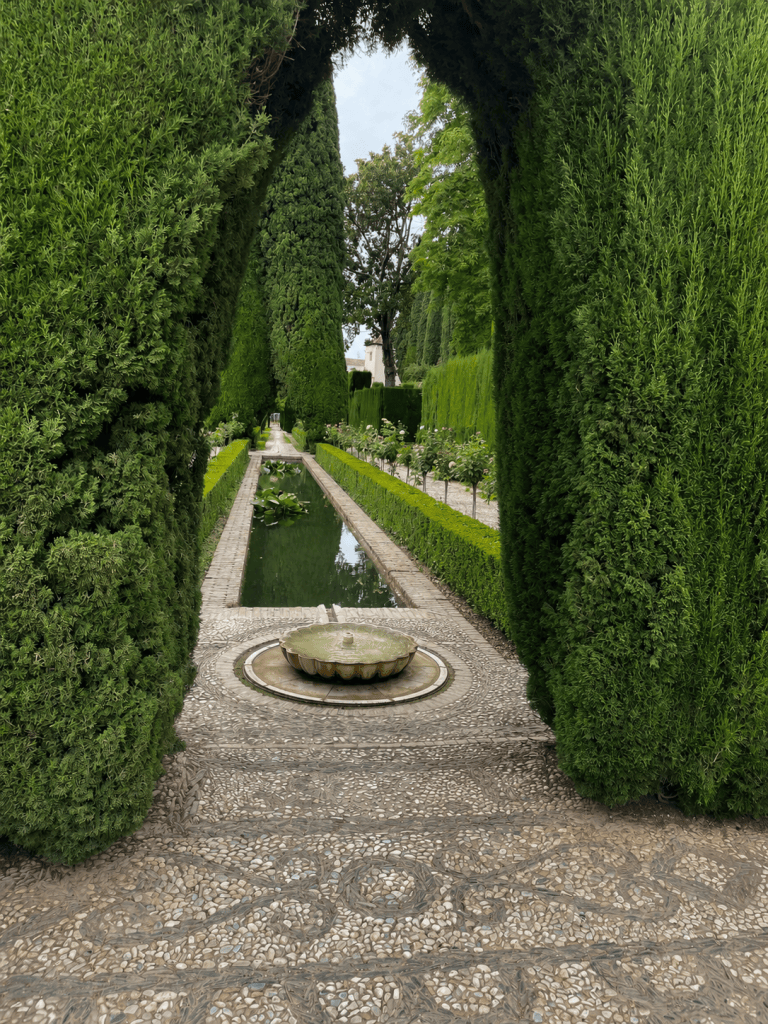
Bringing the water to a fortified city high above Granada was an astonishing feat of engineering. The Acequia Real, the Royal Canal, carried water for more than six kilometres from the River Darro. It supplied the palaces, gardens, baths, fountains and the wider community within the walls. Without it, the palatine city of the Alhambra could not have existed.
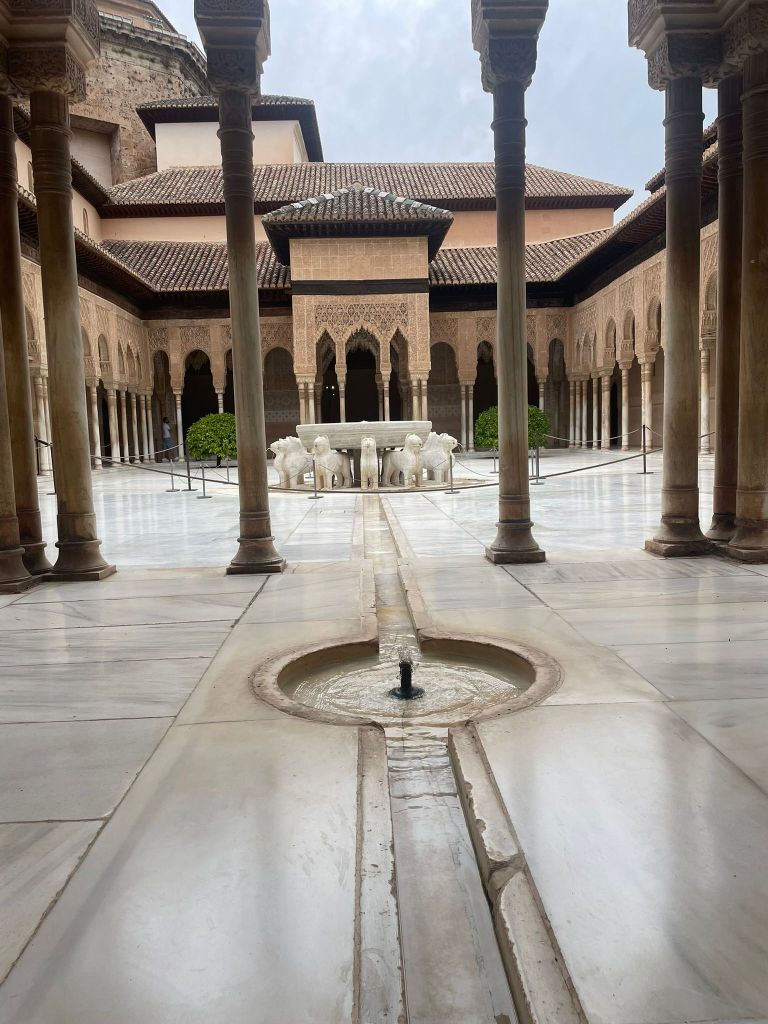
To command water in this landscape was a demonstration of knowledge and royal power. The Fountain of the Lions, at the heart of Muhammad V’s palace, may itself have symbolised the sultan’s authority through his ability to provide and control this precious resource.
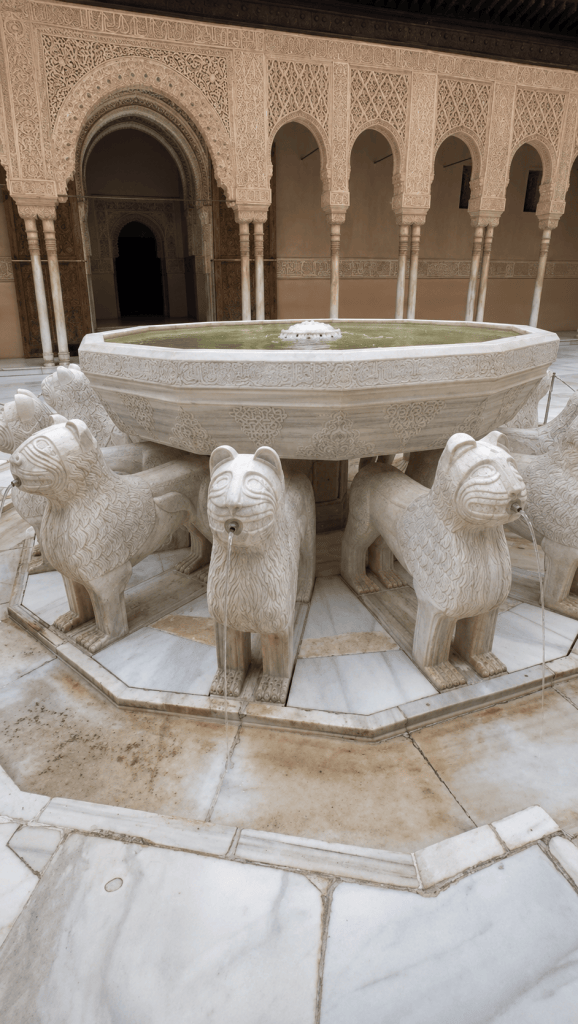
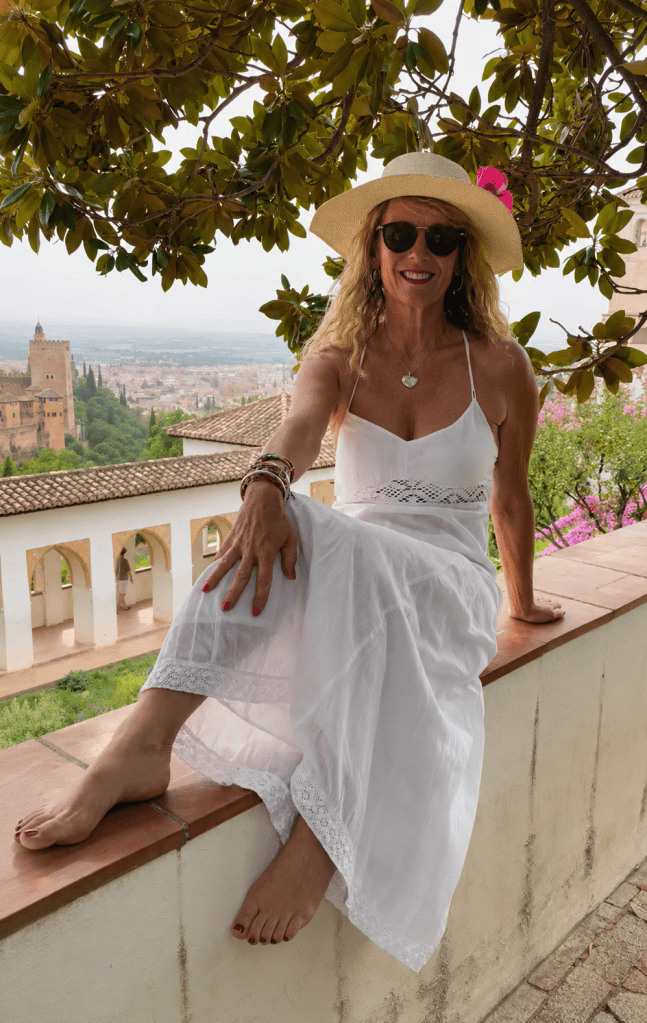
But that was not how the water made me feel. It did not speak to me of dominance. It spoke of flow. Of renewal. Of life finding a way through even the most imposing structures. The water reflected the palace, but it also dissolved its certainty. Arches trembled on the surface of the pools. Solid walls became shifting patterns of light. What had been constructed to appear permanent could change with the smallest ripple.
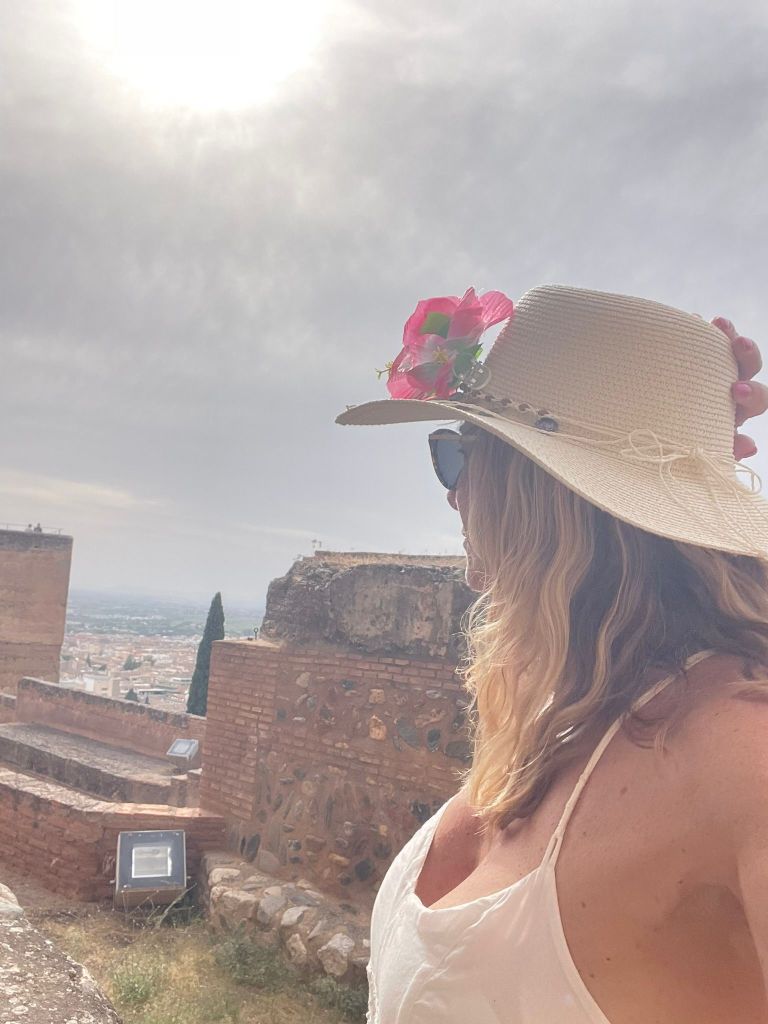
Perhaps that was where I found the true spirituality of the Alhambra. It was not a temple, yet it created contemplation. It was not built solely as a sacred place, yet its light, water, proportion and silence invited me to become still. Standing there, high above the city, I did not feel separate from the mountain I had just left. I felt connected to it. The Sierra Nevada had shown me spirituality in its most elemental form, vast, wild and exposed. The Alhambra showed me that same energy made intimate, delicate and exquisitely human.
Love, Clara xx


Leave a comment